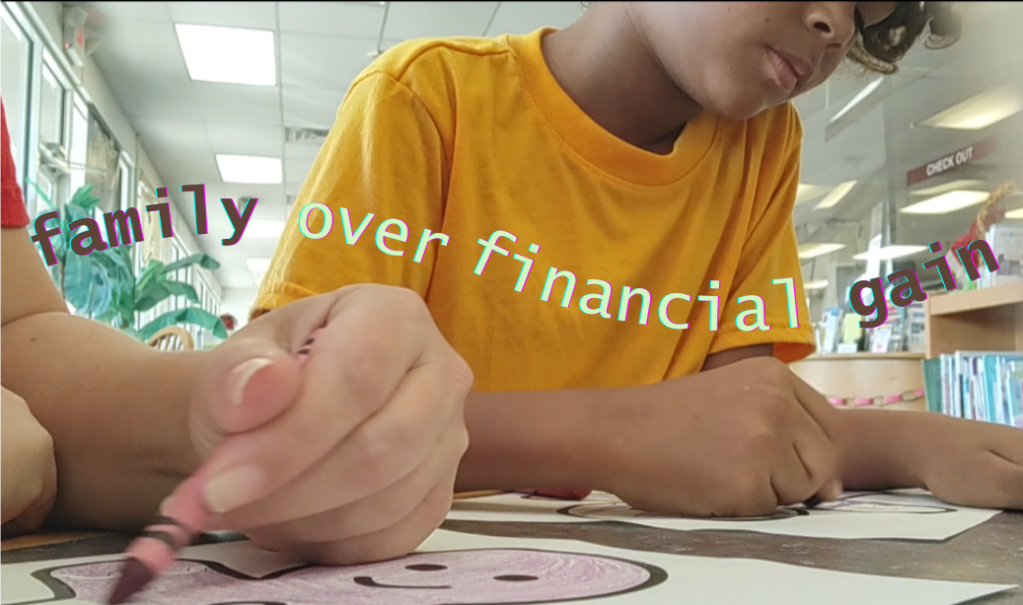
This article is written in response to LinkedIn’s following article “Working Parents Face Child-care Crisis” and the comments (in quotes below) from people who chimed in. I recommend reading their article first to better understand my responses.
https://www.linkedin.com/news/story/working-parents-face-child-care-crisis-5126665
The sad part is the children who have to suffer as a result -and be guaranteed, they do. Daycare is not one of the places workers should be under-staffed as it has a direct effect on the children in care and can lead to neglect or abuse, as I have seen firsthand or heard stories of from reliable sources.
As a single Mom/parent, I’ve recently worked a job with childcare and my sole reason for taking this position was so that I could continue being with my own son (since he could be registered for free as a result of my working there) and because I could not afford childcare that would afford me to work somewhere else. Somewhere that would have been much more preferred, paid better wages (yet still not enough to pay for childcare while having enough left for bills, rent entirely being out of the question), and provided a better outlook for progression in my field of experience.
I’m now leaving my childcare job as it has failed to show me how it could significantly improve our lives and in some ways is making it worse (which is why I’ve tried so hard to stay home the past several years), so I’m returning to building my own businesses and seeking remote work-from-home jobs and continuing in exploring alt lifestyles that give us a truly better opportunity -not just for more income, but for a better quality of life. One lived around values, not around building the machine of economic growth for who knows who?
We cannot value economic growth as being the strength of our nation, while the family unit, the very fabric of what our nation is made of, is unraveling. Our strength as a nation comes from the value we put on each other and the unity we know instinctively through what we’ve observed. A broken family cannot demonstrate unity, so the core issues we are facing go deep. A strong nation needs a strong family.
I’m interested in where all of this data is leading… I’m glad that problems like childcare staff, elderly care, and women’s need for more remote job opportunities are being brought to the spotlight; but the reason for bringing it to the spotlight seems to send the message “we need to care more about these areas because we’re losing money / we need more workers in the workforce,” not “we need to care more about these areas because we really value the quality of life children, parents and elderly are able to have.”
My goodness, if our infrastructure is failing in every age group from infants to the elderly, who really has a chance?? We need to really rethink more than just missing workers, as these were problems before covid, that have only been magnified since.
My suggestion is to re-prioritize the family unit as being such, one-together. Regardless of feminist ideology, the majority of moms that I know, have talked to, have heard complaining, still have a painful longing to be home with their kids. And the children that I’ve seen and heard don’t want to be in daycare, they want their Mommy’s and Daddy’s, even the oldest ones. Dads as well live to see their family, some preferring jobs that allow them to do so, but we have fundamentally altered our concept of family and the value it brings to our infrastructure and our own peace of mind.
Many women DO NOT WANT to return to the workforce post-covid (contact me for data references), not because they’ve lost money, but because being at home, taking care of their kids and their parents or whoever else they left their jobs for has become more valuable to them than the money they were making. So, if we want to change our infrastructure for the better, we need to make it less about money and numbers, and more about what really matters to the people who are being affected, more about helping strengthen families and less about helping fragmented sectors of the economy produce more.
Please note that parents needing to go into the workforce generally sends the message that they are doing so to bring in more income, not spend more income (on Daycare/Childcare) as is a direct link in why childcare will never be the best option. How to help moms stay home is the better direction to go (with prioritizing remote work as one plausible area of solution). I would also challenge the quoted average wages for childcare at $19 an hr; I’ve not seen that or anywhere close to it in our area.
Thank you for reading my Opinion article. I hope you found it useful or insightful. I welcome any comments, feedback, differing viewpoints or contacting me for further exchange. 🙂
-Forever Blessed
Some quotes from various people in the commenting section of the original link:
“Why are children given public education from 5-18 years of age but not from the ages of 6 months to 4 years old?”
“We really need to start prioritizing care, both child and elderly, or the workforce strain is just going to get worse.”
“Families with multiple young children spend more on child care than on housing when they put their kids into daycare (BLS report).”
“Assuming one parent needs to stay home and not work, that’s 250,000 fewer employees in the marketplace.
Challenge–childcare providers can’t compete for talent on either the money OR flexibility workers want. They can’t raise their rates because parents can’t pay more and the teachers need to be onsite to do their jobs within certain hours.
Unfortunately, Federal support for childcare was not passed. And now we are seeing the real ramifications.
Childcare is infrastructure. And that doesn’t include eldercare which is equally as unreliable and unavailable in many cases.”
“Child care in the USA can’t compete with employers who can offer the trifecta of employee demands – higher wages, flexible hours, and remote work. Key elements of the progressive workplace are effectively driving parents out of the RTO/RTP employment market. This interesting twist of fate will add further impetus to remote working.”
 Angle & Perspective
What’s your angle and perspective?