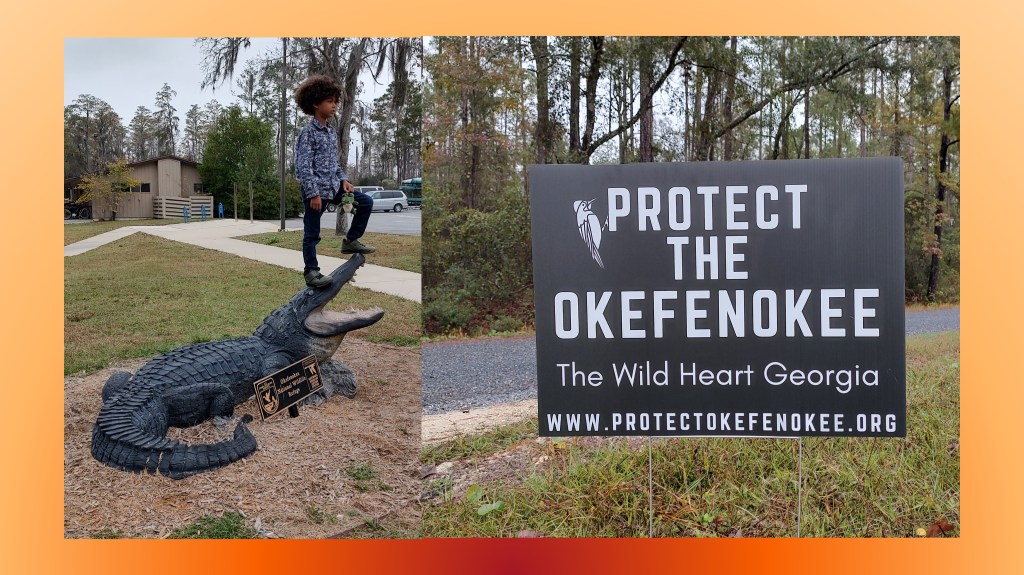
Habitats | Ecosystems | Protected Wetlands | Plant Diversity | Wildlife Diversity | U.S. Historical Sites | American Tourist Destinations | Wilderness | Wildlife Exploration | National Wildlife Refuge | Preservation | Conservation | Mining | Community | Activism | Park Sustainability | Jobs | Parks and Recreation | Environment | Industrial Impacts |
Article sections:
Intro
Personal Historical Significance
Activities and Attractions
Ecological Significance for Protection Against Mining
Activism Call to Action
Intro
The Amazon has been called “the lungs of the earth1,” the Okefenokee, “the lungs of the Southeast.”
Just as the Amazon has fought intense battles for environmental protection; over 400k acres of Okefenokee Swamp-lands are now under threat as mineral miners seek to mine close to its borders, which activists and even non-activists fear will dramatically effect its ecosystem and the water systems that so many Georgians and Floridians depend on. As the year comes to a close, The Okefenokee Protection Act HB71 remains to be passed before its deadline of 2024.
Personal Historical Significance & Attractions
The mining has caused great concern with residents local to all its borders, like myself and many in my community, who have deep-rooted ties to the Okefenokee. For me, the Okefenokee might as well be kin since its hosted our family reunions for decades, with a nearby road named after one of our ancestors, and memories handed down by elders from before I was even born.
My oldest memories bring back jovial childhood pastimes: camping side by side in huddled tent sites, running around playing with my cousins, all of us (including adults) biking along the winding paved roads within it -always on the lookout for snakes, bears and alligators. And at night, sipping hot cocoa and roasting marshmallows around the campfire, laughing, and having a “good ‘ol time” (as the old folks would say).
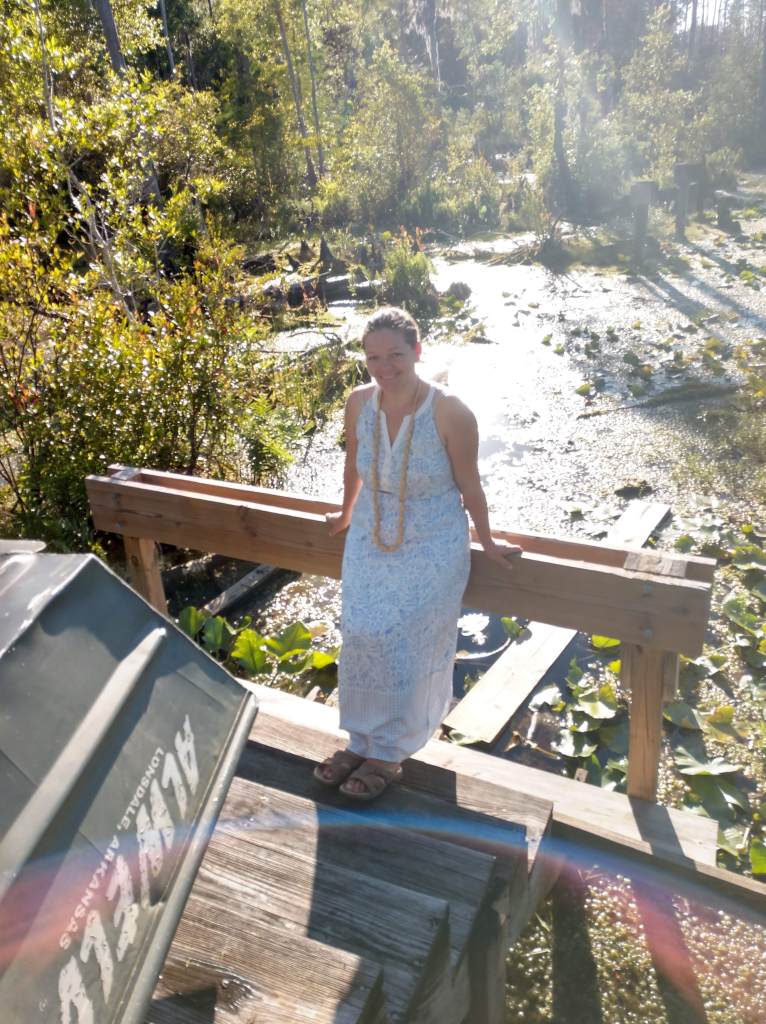
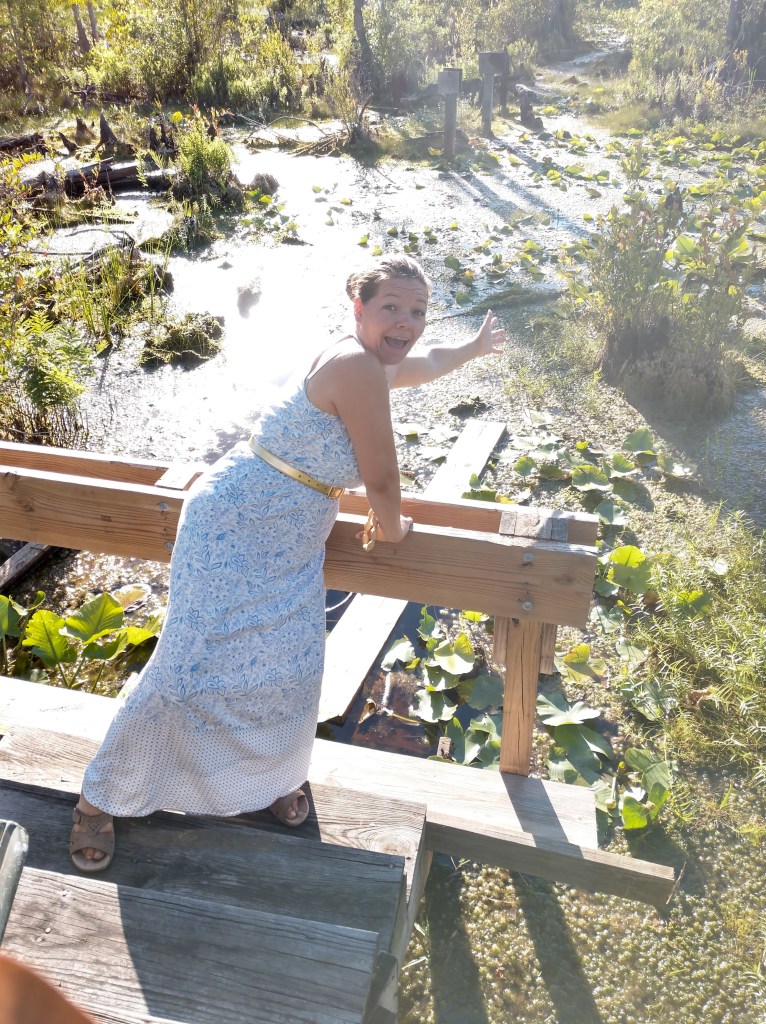
Other memories include the lookout tower at the end of a long stretch of boardwalk through the swampy thickness of cypress stumps and trees, where, as long as you weren’t too weak in the knees, you could get a view like no other of the scenic wetland stretching as far as the eye could see. The sounds of distant crocodile grunts, crickets, birds chirping, all creating a natural symphony. And of course mosquitoes…
Fun facts: The waters of the Okefenokee are too acidic for mosquitoes to breed in, decreasing the mosquito population around the swamp. (We didn’t get bit one time on the boat tour!)
…In fact, our ties to the land are so strong, when I was writing this article I was thinking about one of my aunts in particular who took us on many fun and memorable “self-guided” adventure tours around the swamp. I reached out to her and she said she had just woke up from a dream about us going on an adventure trail “somewhere” and helped me with finding a few of our family photos to share.

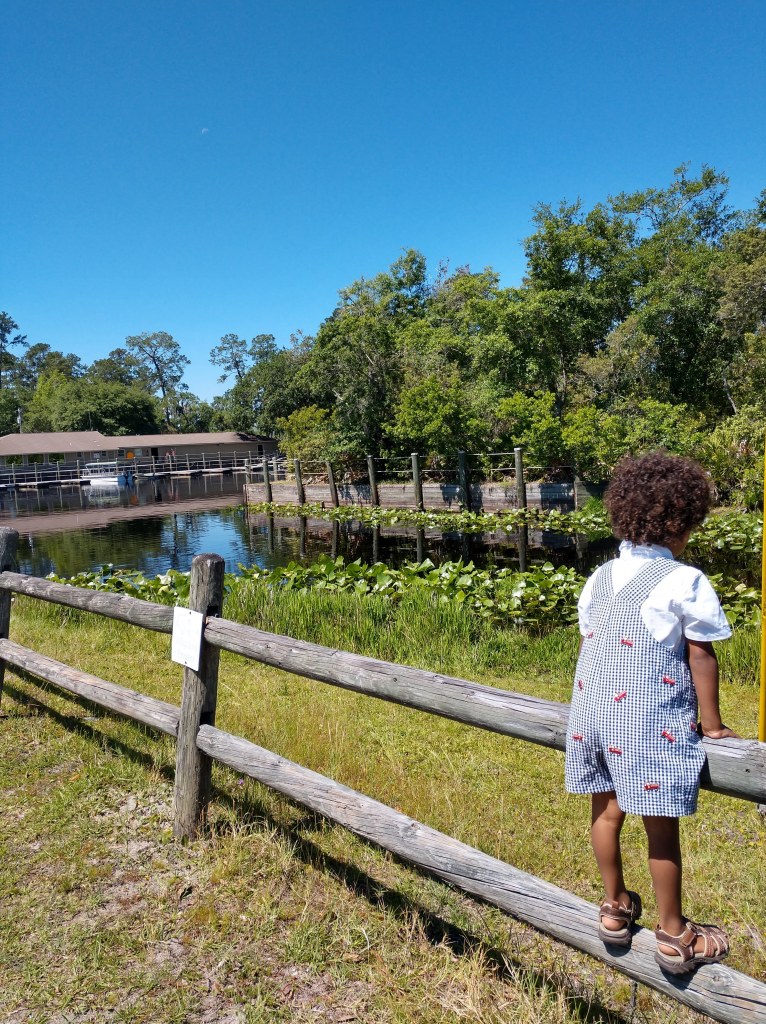
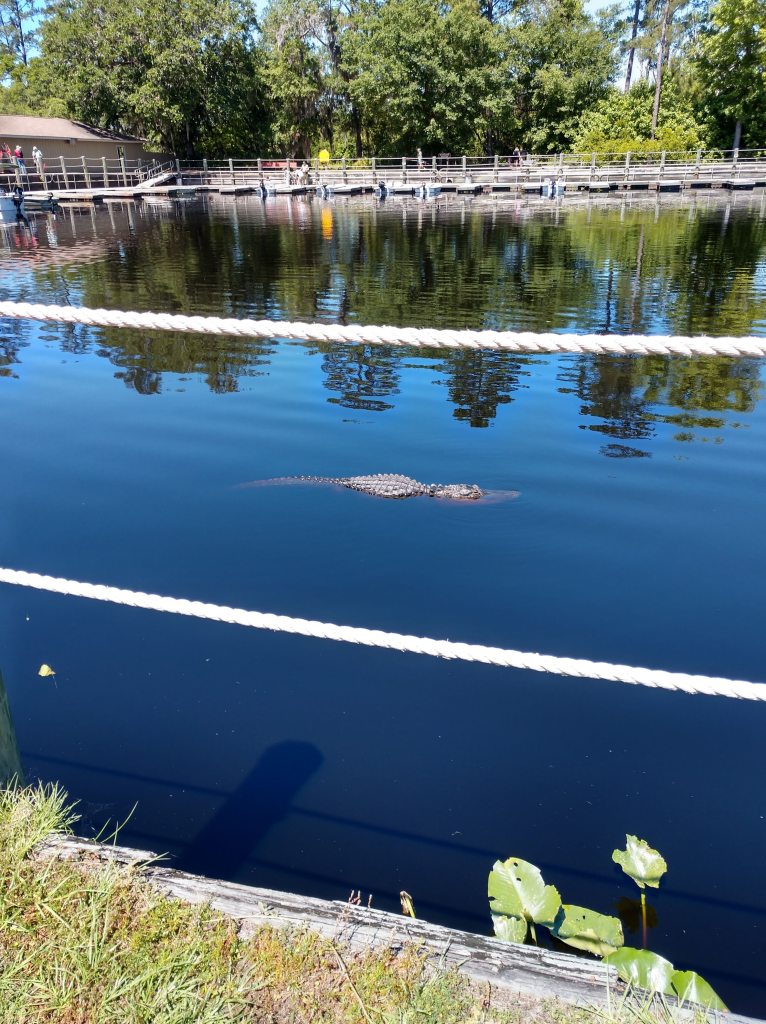
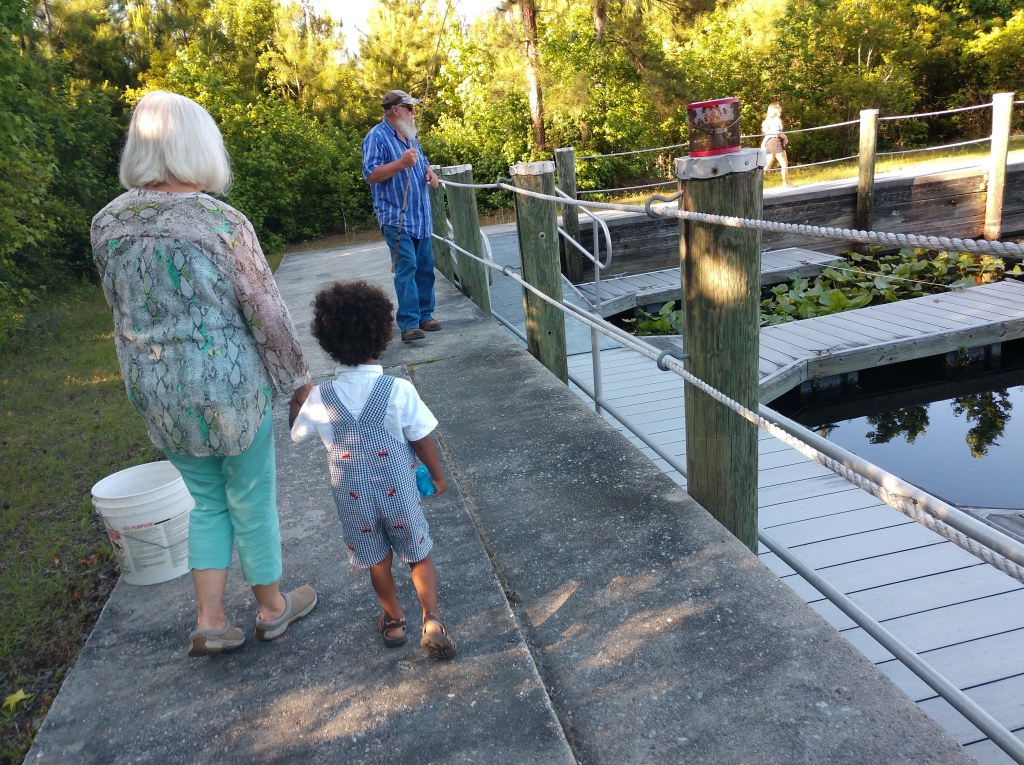
Photos taken by Erika Smith at an Okefenokee Swamp family reunion:



Activities and Attractions
Okefenokee has several entrances and sites that are different from each other, each unique in its activities and attractions and far too many to list in this article. The park offers recreational and educational opportunities to individual visitors and groups. One site has a homestead tour by train, boat tours, an alligator pit, and museums. Another site has the Chesser island family homestead2 (where some of my first self-sustainable-living notions stemmed from). Other sites have movie presentation theaters, hands-on museums (you might even get to pet a baby alligator on the right day), and still another park holds live demonstrations of Native and pioneer era skills.
Bird-watching, fishing, camping, trail-hiking, biking or horse-back riding, guided tours, observation decks, special event days… just to name a few more…
Both kayaking and motor-boating are offered by Okefenokee swamp through their same-day rentals. As a kid, the most fun was when we got to go out into the swamp of the swamp. Fun and maybe a little adventurously scary if you think too much about going over board in the black waters, kayak sinking, or getting lost in alligator territory. Otherwise, a great time…in a place like no other.
Recently, we were graciously invited on a boat tour and presentation with local Native American tribal members and is what inspired this article. We enjoyed a fun day learning more about it’s vastly un-tampered wilderness with so difficult a terrain, it’s presumed there are areas possibly still unexplored by man to this day. The wildlife is well adapted to its ecology, especially the numerous alligators that guard and keep it protected by their mere presence.
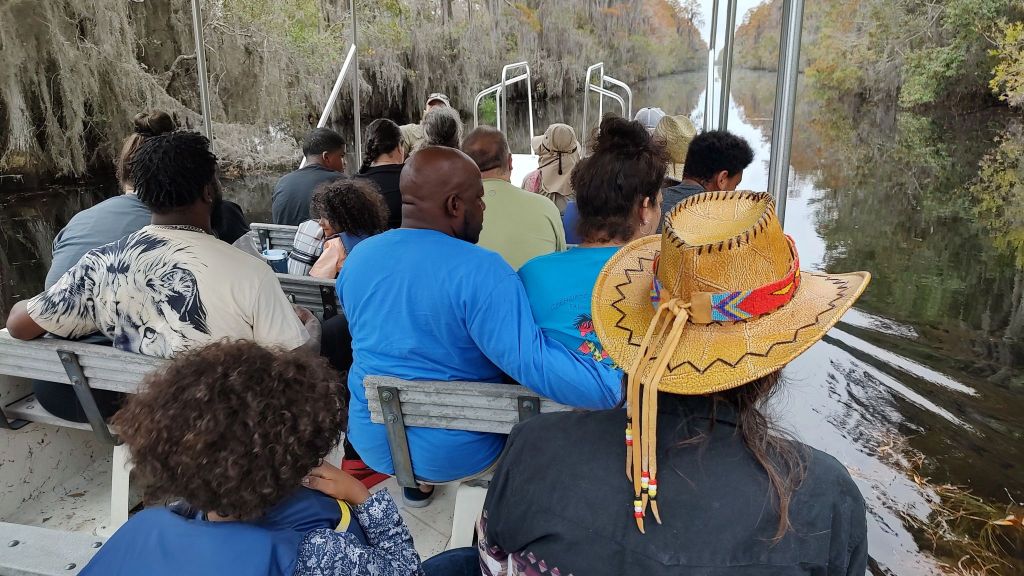
Fun facts: An estimated 10,000-13,000 gators are thought to be living in the Okefenokee swamp.3 But no worries, thanks to precautionary rules and public adherence, there have been no recorded alligator attacks on humans in over 80 years.4
Ecological Significance for Protection Against Mining
The Okefenokee Swamp was set up as a National Wildlife Refuge for its value to American wildlife populations and endangered species and their habitats. It also has federal protection as a wilderness area to help ensure its natural ecosystem is preserved without commercial development and can truly remain wild. But these protections are only good within its borders, not outside. The surrounding borderlands don’t have the same protection and their significance in relation to the swamp is often unknown, overlooked or less appreciated by private land owners and investors.
A major focus of wilderness areas according to The Wilderness Act of 1964 is to protect endangered and threatened species, and to preserve the untouched “wilderness character” of the region. All of these protections ensure that the Okefenokee is protected from internal threats. Unfortunately, many of the Okefenokee’s greatest threats come from the surrounding, adjacent areas of land, which have no form of protection. In other words, the most severe impacts on the swamp are now coming from beyond the area in which it is protected, where it is difficult to prevent damage to the ecosystem.” – River Basin Center, University of Georgia5
“When an Alabama company called Twin Pines Minerals proposed to strip-mine for titanium just outside the fragile Okefenokee Swamp, environmental groups and even federal agencies went up in arms…The Environmental Protection Agency’s regional administrator said it would “have a substantial and unacceptable impact.” The U.S. Fish and Wildlife Service also opposed mining on the edges of the Okefenokee National Wildlife Refuge. And Patricia Griffin, an Atlanta resident who made one of more than 60,000 public comments to the U.S. Army Corps of Engineers, said that “if this permit is approved, it will be the death of the most beautiful place on Earth.”” – Washington Post Article6
Twin Pines Minerals company starting site planning in 2018/20197 to mine for minerals such as titanium on the south end of the Trail Ridge. Trail Ridge is the natural geological barrier or dam around the east side of the Okefenokee that holds it in tact. Water passes through Trail Ridge into the swamp and St. Mary’s river8. Many are concerned by how the mining might disrupt the current environment. They fear implications to waterflow, wildlife populations, the swamp’s fire resistance, and the park’s ability to function if it loses primary water features.
“When the mining starts -once it gets started, the toothpaste is out of the tube, you’re not gonna put that genie back in the bottle.” – Okefenokee park worker9
One of the greatest concerns is that mining will lead to problems with the soil structure on which the swamp resides. On the mining site itself -compaction, water table flow rates and water shed/contamination. The mining co. wants to pump over 1 million gallons of water per day and evaporate most of it. The swamp water comes mostly from rainfall, some of which seeps through from Trail Ridge barrier. The swamp waters then drain out through two rivers – The Suwanee River and The St. Mary’s River. The Suwanee River washes out into the Florida Gulf Coast10; the St. Mary’s to the Atlantic Ocean on the east-coast dividing the Florida/Georgia border11, affecting a wide area of population and habitats. An estimated half of the water to be purged by miners would otherwise drain into the swamp.

If you look at a map you may notice that the winding crooked rivers resemble veins in a body. If we think of the earth as a body, a living organism, the waterways are the veins of the body, the lifeblood running throughout the earth -feeding it, providing nourishment and sustaining life. I think if we could look at maps more like this instead of just viewing them as a navigational compasses, it might help us keep a better perspective of how valuable and impactful these larger workings are together in the big picture. -Forever Blessed
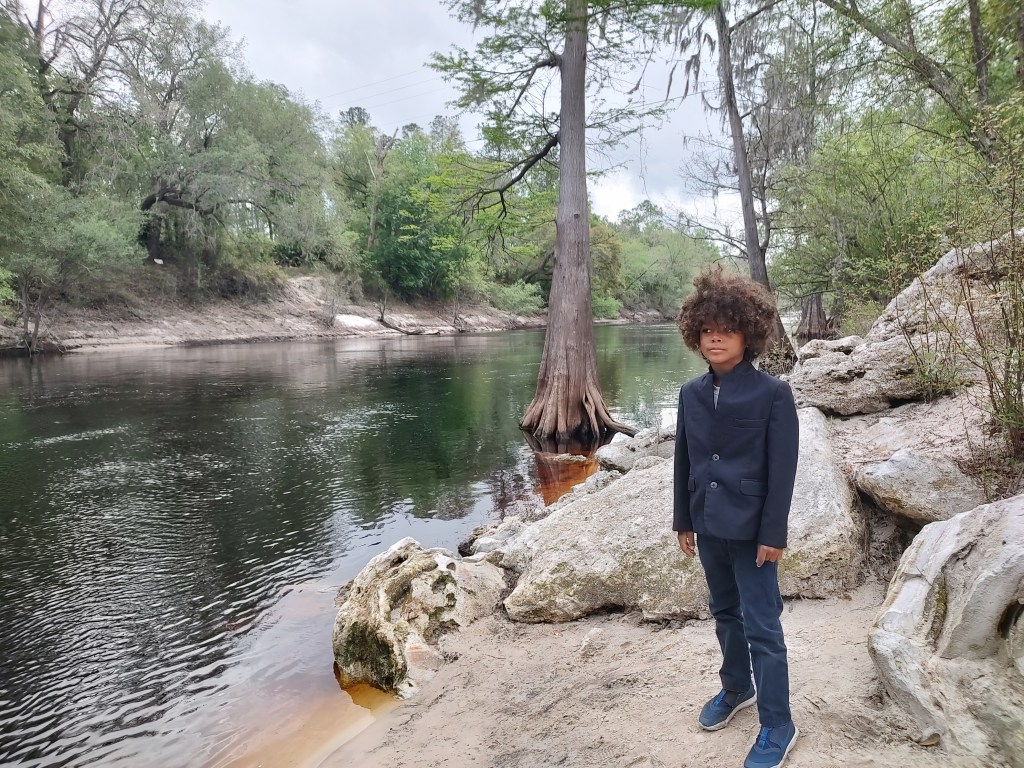
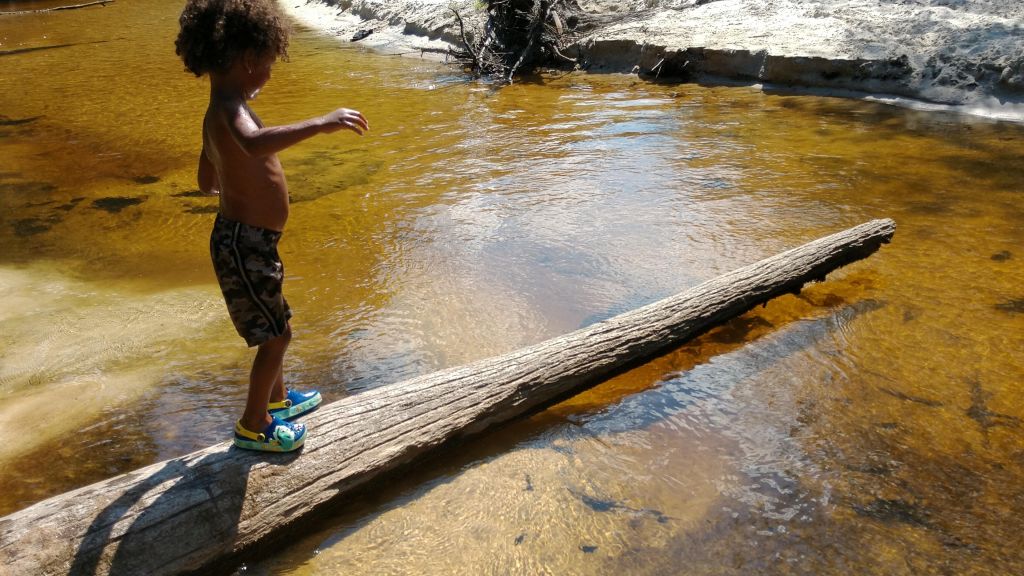
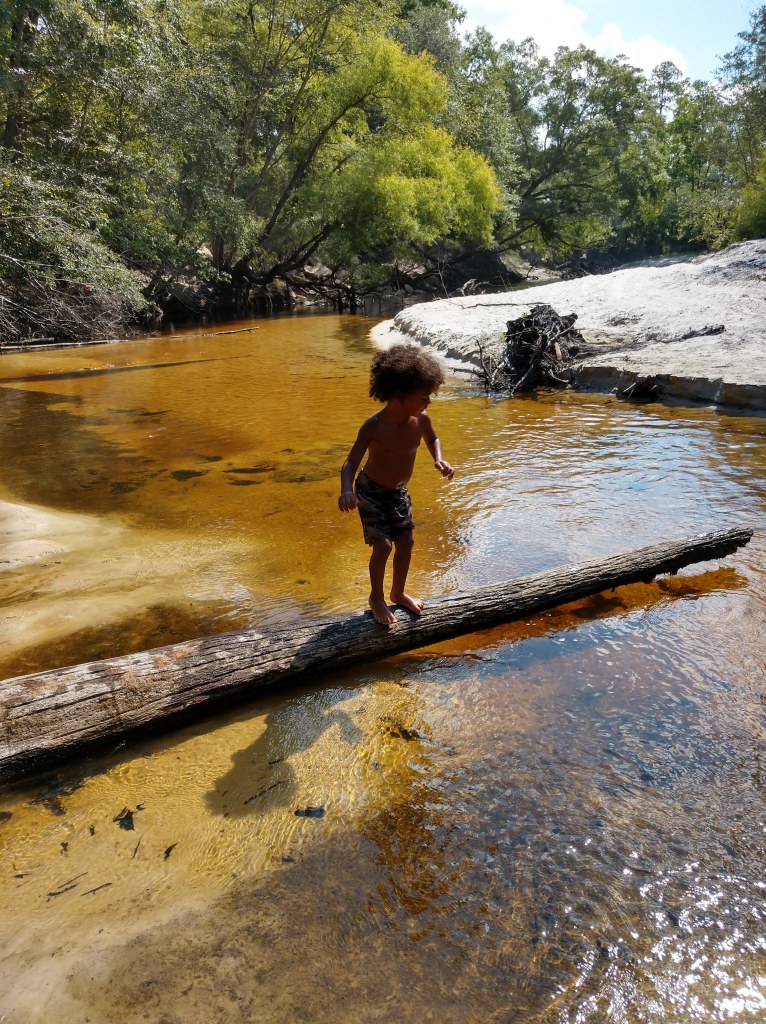
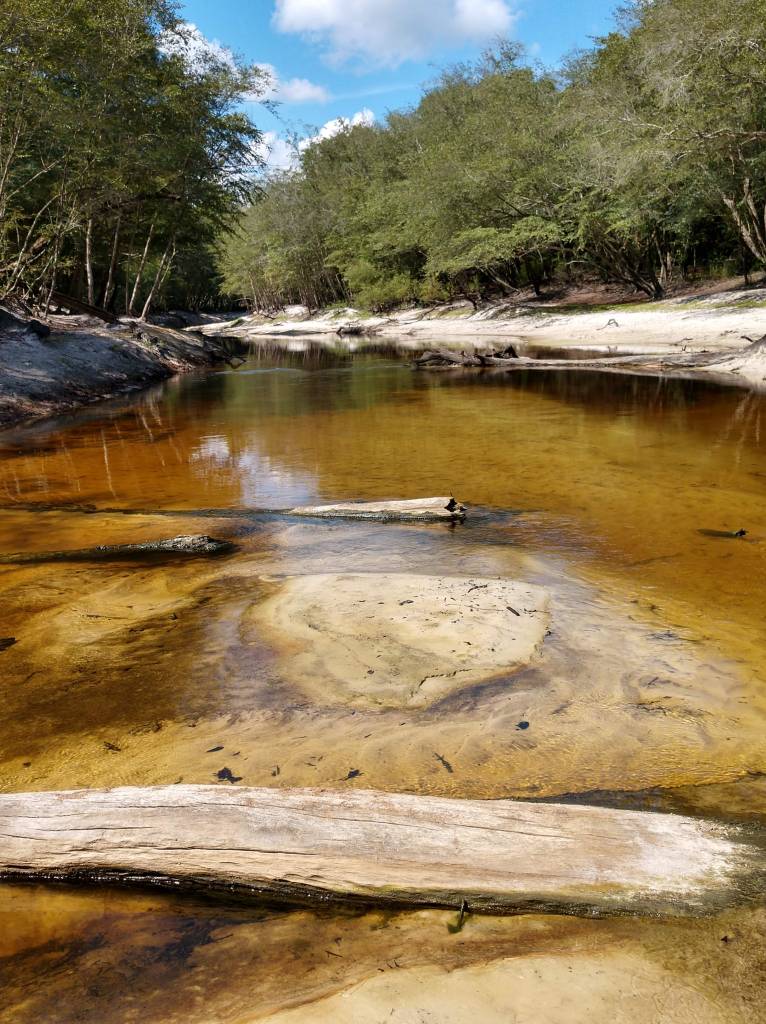
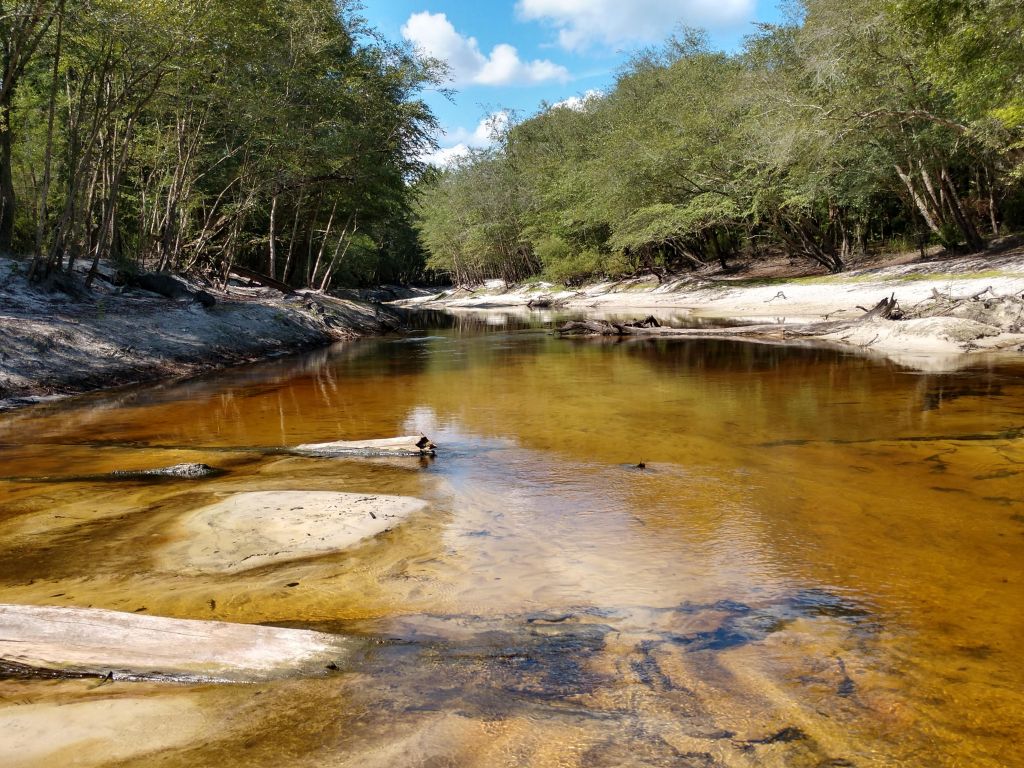
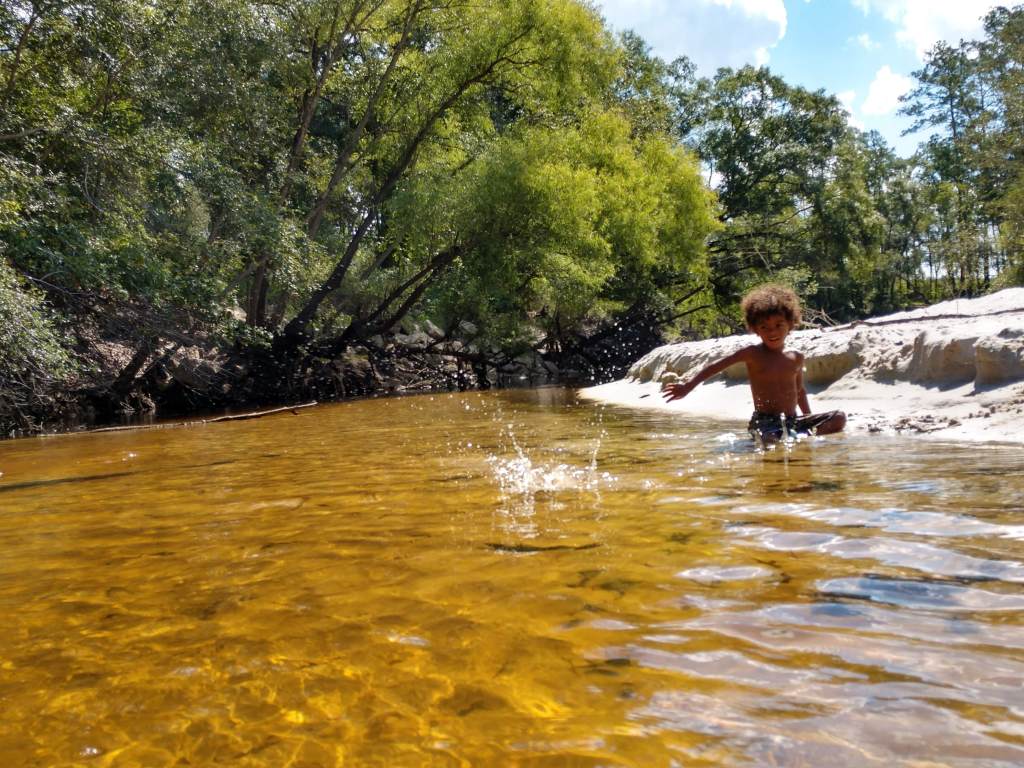
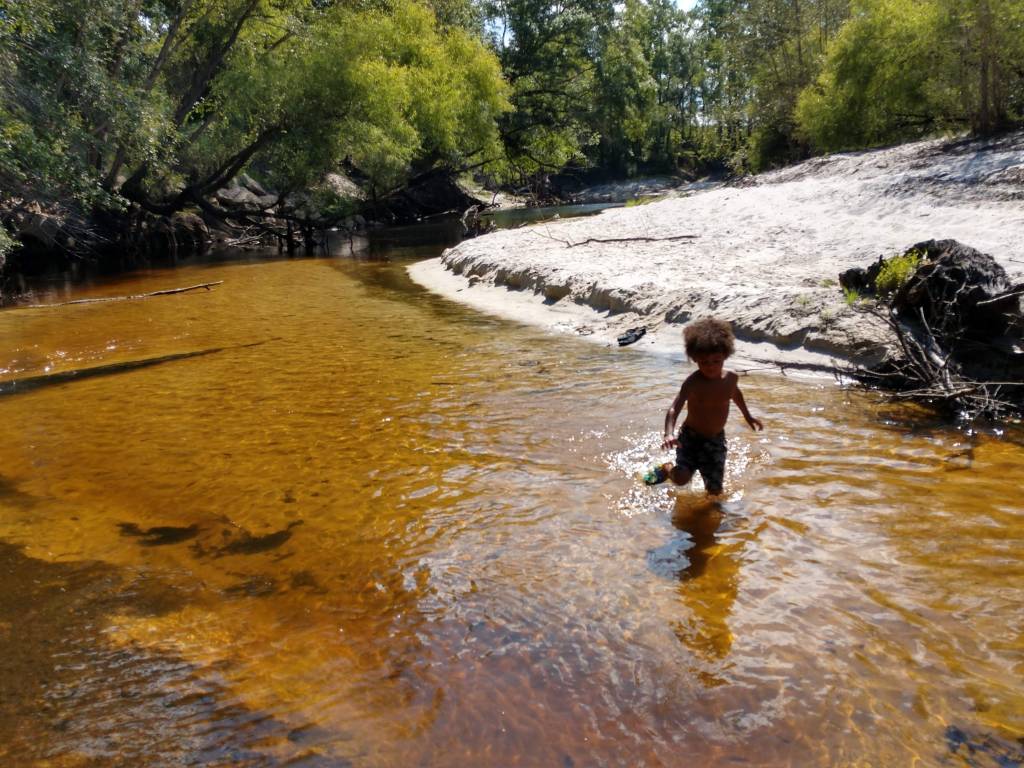
Fun Facts: The Okefenokee Swamp, Suwanee River and St. Mary’s River all carry dark-amber or tea-colored waters dyed so by the tannins of decaying fallen leaves, pine needles and other vegetation, like a big brew of natural sun-infused swamp tea.
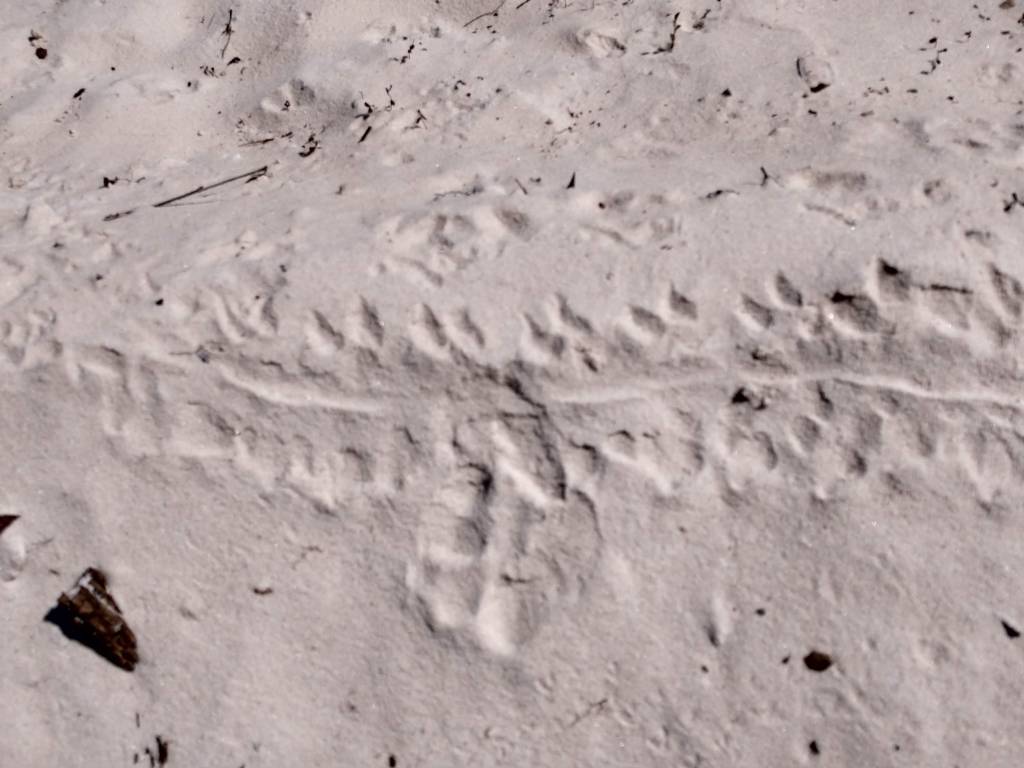
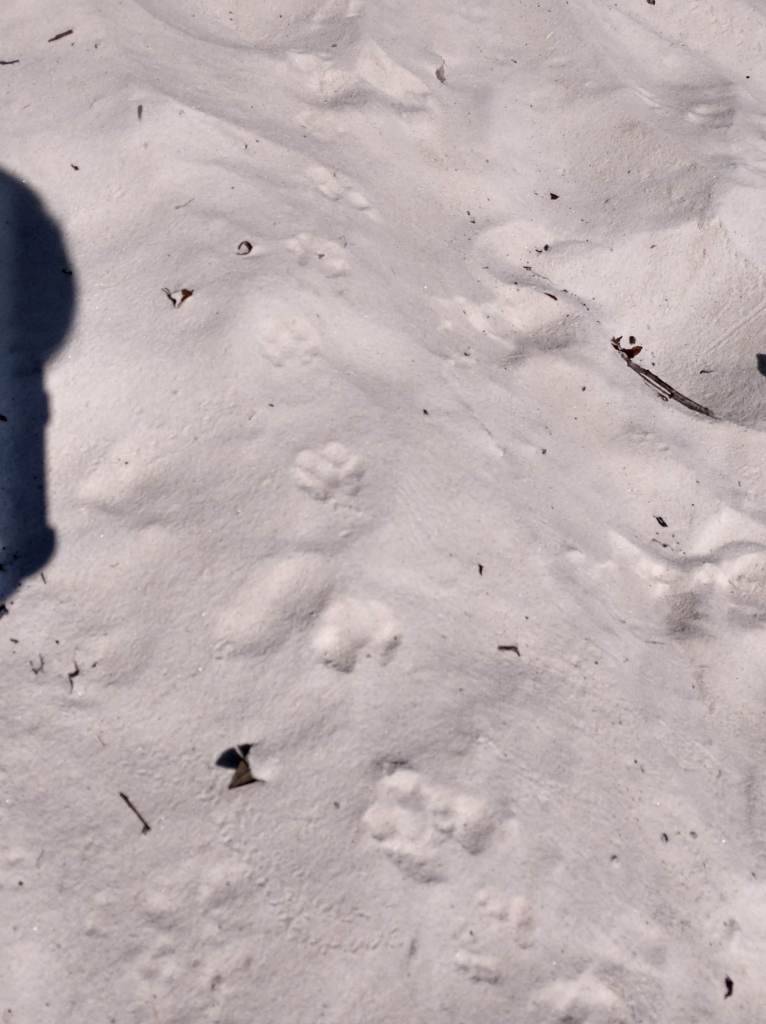
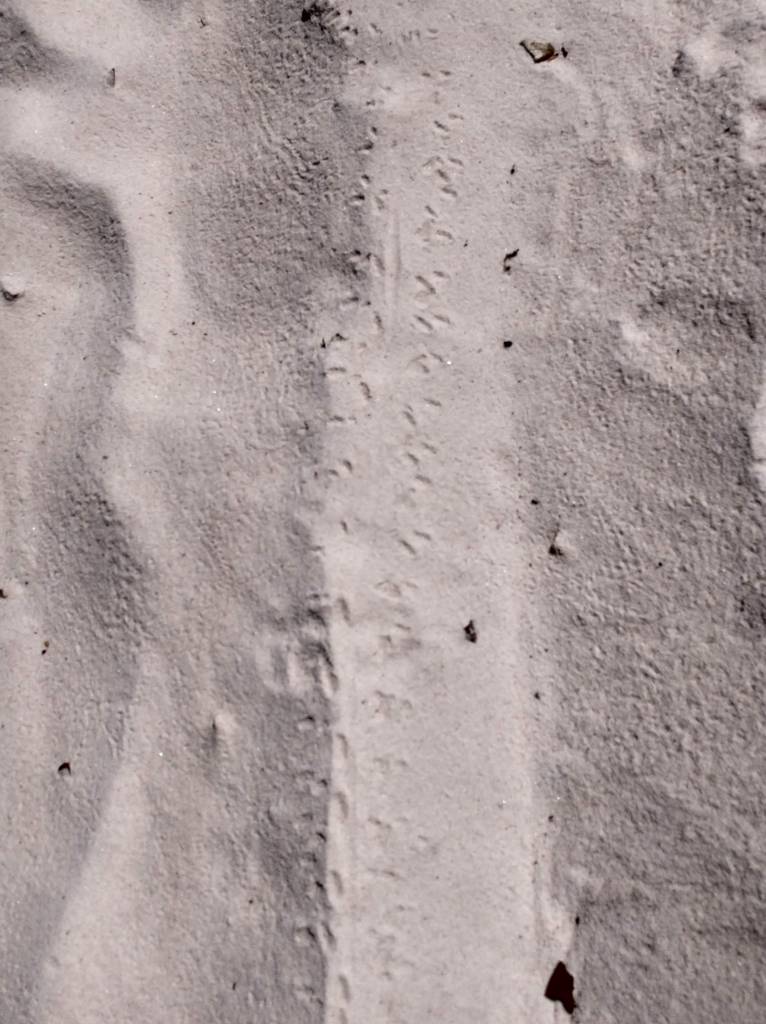
Photos taken by Erika Smith at the Suwannee River
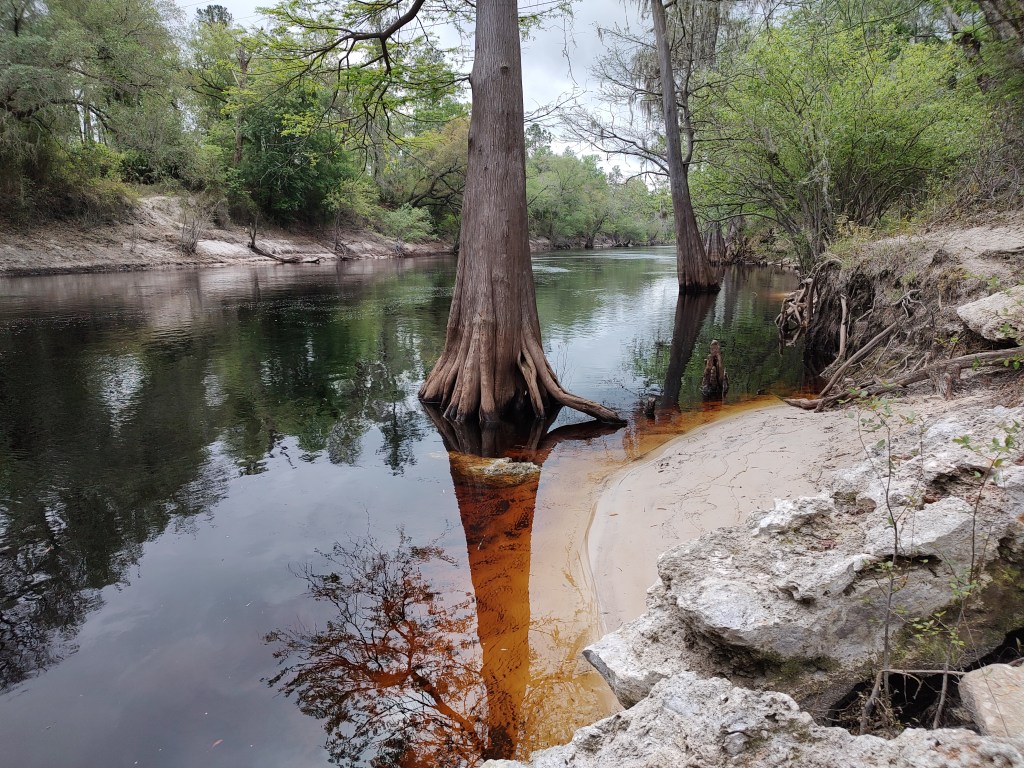
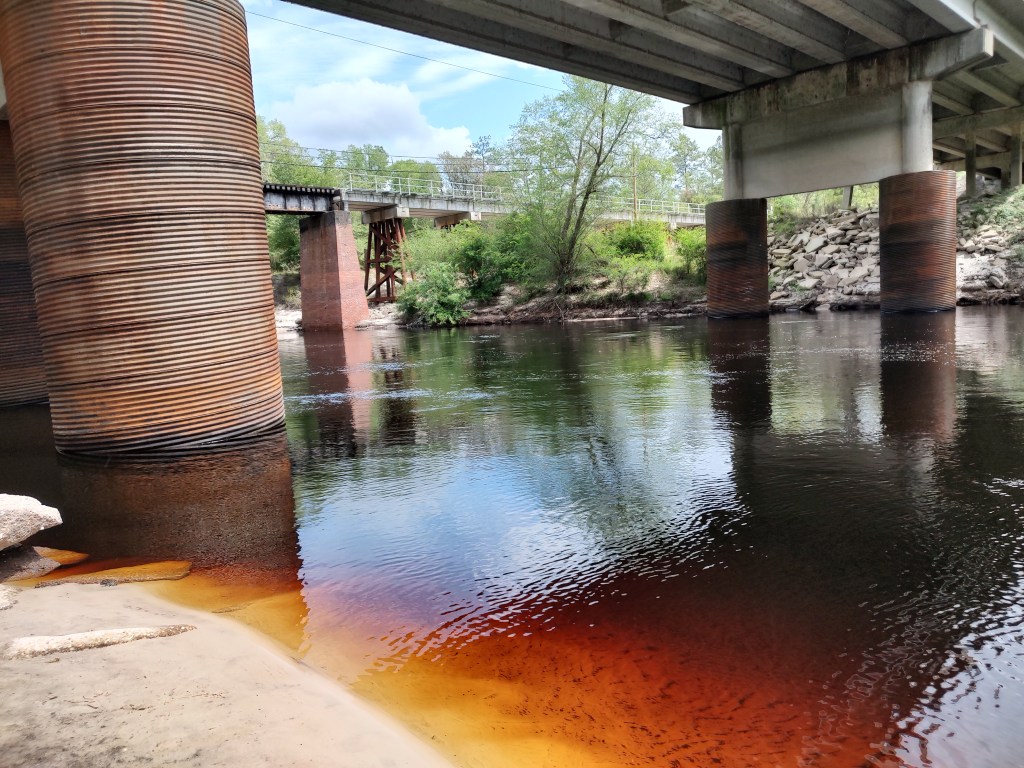
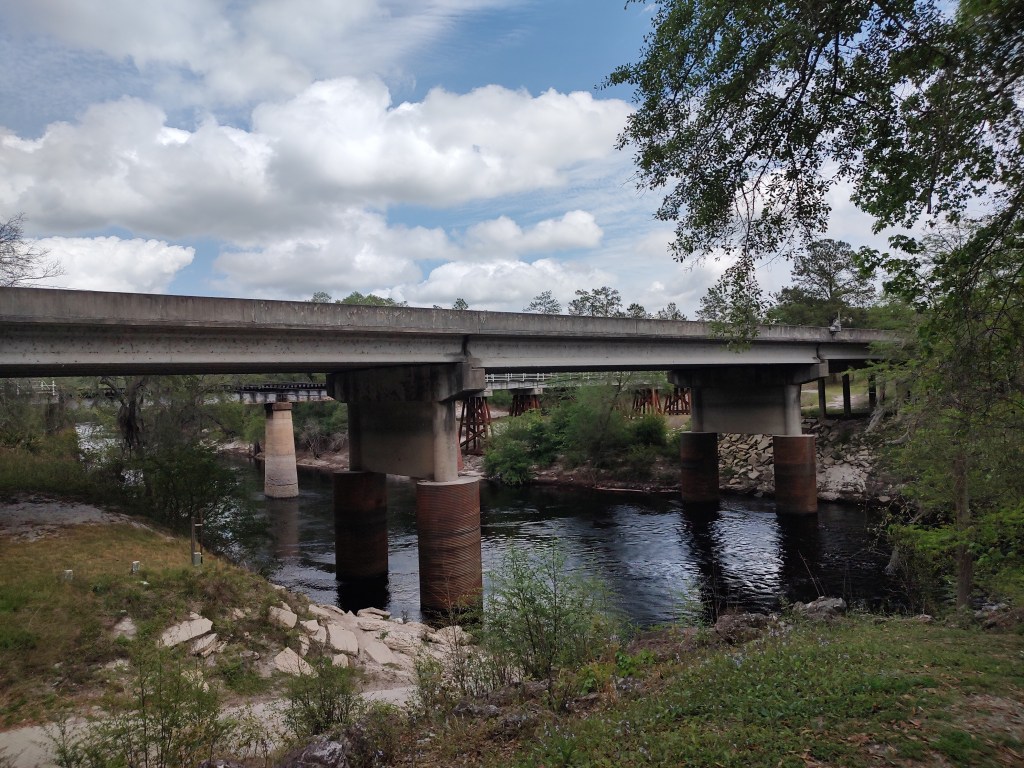
Photos taken by Erika Smith at St. Mary’s River


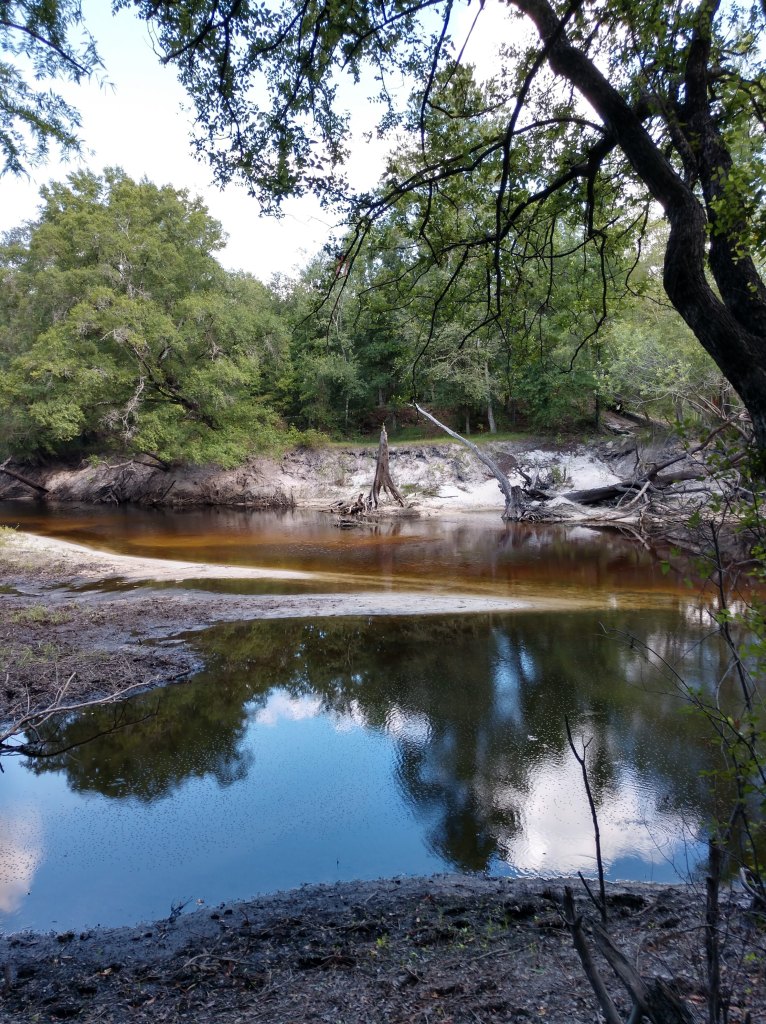
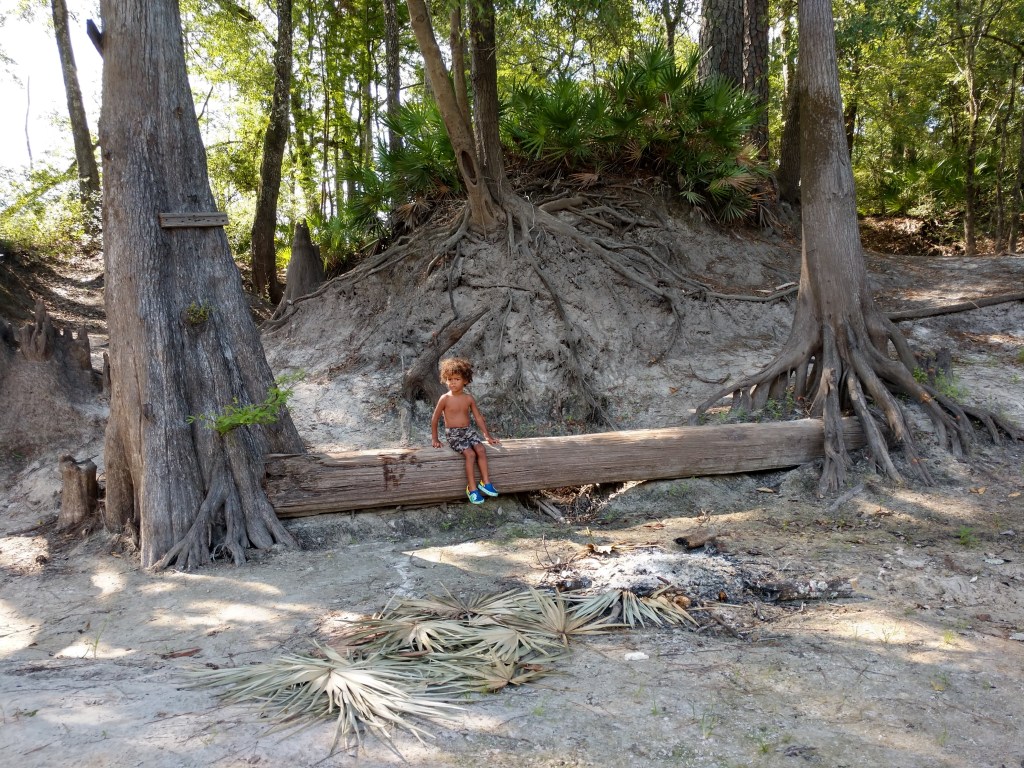
Continued…
“…Georgia environmental regulators are deciding whether to grant permits to a company seeking to mine just outside the Okefenokee. Twin Pines Minerals says it can extract minerals without doing harm, but scientists and other opponents have warned that mining near the swamp’s bowl-like rim could damage the swamp’s ability to hold water. Interior Secretary Deb Haaland last year declared the proposed mine poses an “unacceptable risk” to the Okefenokee’s fragile ecosystem.”– AP News.com article13
“FWS is concerned that the mining…resulting in decreased habitat quality for federally listed and at-risk species that rely on the wetland ecosystem and the possibility of permanently altering the hydrology and fire regimes.” [break] “…lowered water tables within the Okefenokee swamp would elevate wildland fire frequency and intensity due to increased exposure of typically wetted areas and result in degradation of carbon-rich peat soils. This would in turn reduce the capacity of the swamp, a major carbon storage area in Georgia, to retain and capture carbon and assist in controlling greenhouse gasses and climate change.” –Mike Oetker Acting Regional Director, US Fish and Wildlife Service Letter to Richard Dunn, March 17, 202314
“…the first phase of the mine would destroy over 300 acres of wetlands, pump over a million gallons a day of fresh groundwater, discharge pollution, destroy important habitat, and cast noise and light over the refuge, which will likely damage the visitor experience and the local economy.” – GA Rivers Network15
In positive news, The Okefenokee Swamp Park has held long-standing nomination for becoming a UNESCO World Heritage Site and in this year of 2023, strides are being made to raise funds for the application process and nomination fees to be met in hopes of qualifying by 2026.16
Find out more here:
Okefenokee World Heritage site
Activism / Call to Action
If you’d like to help with efforts to protect Okefenokee National Wildlife Refuge and wilderness please visit the links below for further resources. Former battles have been fought in surrounding areas and in the 1990’s DuPont withdrew its proposal after pressure was felt by leaders and activists and eventually even donated 16,000 acres, almost half of which was transferred to Okefenokee Refuge.17
You can make a change!
If you are local, you can sign the petition, call your legislative offices and share materials like this article and links to the sites below to spread awareness of this present battle for Georgia’s unique wetlands.
If you’re further out you can still help by caring and sharing. Don’t forget you can also visit the park! International visitors make up some of the 600-700,000 annual number of visitors to Okefenokee.
Thank you for supporting our natural homelands,
iam:ForeverBlessed … and I hope you are too!
Formally, Erika Smith
writeme@angleandperspective.com
Activism links:
Okefenokee Protection Alliance
https://protectokefenokee.org/ – leading coalition of 40+ organizations
One Hundred Miles (GA coastal non-profit)
(912) 264-4111
P.O. Box 2056
Brunswick, Georgia 31521
https://onehundredmiles.org/okefenokee/ – Sign the Petition and learn more about other ways you can get involved
Georgia Water Coalition:
https://www.gawater.org/okefenokee-swamp – Support Okefenokee Protection Act HB71 (expiring soon) This bill prohibits future mining proposals on a very specific, narrowly defined area of Trail Ridge next to the Okefenokee.
GA River Network
https://garivers.org/legislative-updates/ – Legislative updates and more
Further Resources:
Saving The Swamp News
UGA River Basin Center – List of helpful resource links at bottom of FAQ’s
U.S Fish and Wildlife Service
https://www.fws.gov/refuge/okefenokee
News article about mining
1https://www.bbvaopenmind.com/en/science/environment/real-lungs-of-the-earth/#:~:text=Thus%20it%20is%20true%20that,oxygen%20is%20actually%20very%20small.
2https://southerngeorgiamagazine.com/portfolio/chesser-island-homestead/
3https://www.sherpaguides.com/georgia/okefenokee_swamp/creature_feature_alligators/index.html#:~:text=The%20majority%20of%20Georgia%27s%20alligators,the%20Okefenokee%20National%20Wildlife%20Refuge.
4https://rivercenter.uga.edu/the-okefenokee-swamp/okefenokee-frequently-asked-questions/#:~:text=No%20alligator%20attacks%20on%20humans%20in%20the%20swamp%20have%20been%20recorded%20in%20the%20last%2080%20years.%20It%20is%20important%2C%20however%2C%20not%20to%20feed%20gators%20or%20try%20to%20touch%20them.%20Habituating%20gators%20to%20human%20contact%20makes%20them%20dangerous.
5https://rivercenter.uga.edu/the-okefenokee-swamp/okefenokee-conservation/#:~:text=As%20a%20National%20Wildlife%20Refuge,America’s%20wildlife%20and%20their%20habitats.
6https://www.washingtonpost.com/climate-environment/trump-rule-eases-effort-to-strip-mine-near-okefenokee-swamp/2020/11/25/84ed10ba-229a-11eb-a688-5298ad5d580a_story.html
7https://en.wikipedia.org/wiki/Okefenokee_Swamp#:~:text=In%202018%2C%20Twin,refuge.%5B12%5D
8https://www.gawater.org/okefenokee-swamp
9https://youtu.be/aU7xyMERduE?si=V6ZwnUN8XQ52rU8h
10https://www.google.com/maps/place/Suwannee+River/@29.2974088,-83.1612007,12.5z/data=!4m6!3m5!1s0x88e92e3bc6489671:0x84c5163b6e721d42!8m2!3d29.9577737!4d-82.9306106!16zL20vMDJkMDNu?entry=ttu
11https://www.google.com/maps/place/Atlantic+Beach,+FL/@30.6950758,-81.5098354,12.4z/data=!4m6!3m5!1s0x88e449330b770b5f:0x12485e8b3ca99723!8m2!3d30.3344077!4d-81.398696!16zL20vMHJrZHc?entry=ttu
12https://sciencelookup.org/wp-content/uploads/2021/04/Okefenokee-Hydrology-Final.pdf
13https://apnews.com/article/okefenokee-wildlife-refuge-unesco-world-heritage-site-499cd975a576658966f7abef26dbba1c#:~:text=Georgia%20environmental%20regulators,Okefenokee%E2%80%99s%20fragile%20ecosystem.
14https://www.fws.gov/sites/default/files/documents/Letter_RD%20to%20GA-EPD_TwinPines%20Signed.pdf
15https://garivers.org/okefenokee-comments/#/369/
16https://apnews.com/article/okefenokee-wildlife-refuge-unesco-world-heritage-site-499cd975a576658966f7abef26dbba1c#:~:text=At%20the%20earliest%2C%20she%20expects%20a%20final%20decision%20from%20UNESCO%20in%202026.
17https://en.wikipedia.org/wiki/Okefenokee_Swamp#:~:text=In%202003%2C%20DuPont%20donated%20the%2016%2C000%20acres%20(6%2C500%C2%A0ha)%20it%20had%20purchased%20for%20mining%20to%20The%20Conservation%20Fund%2C%20and%20in%202005%2C%20nearly%207%2C000%20acres%20(2%2C800%C2%A0ha)%20of%20the%20donated%20land%20was%20transferred%20to%20Okefenokee%20National%20Wildlife%20Refuge
 Angle & Perspective
What’s your angle and perspective?